September 4, 2026
How to Measure Your Pet for a Carrier: Size, Weight and Fit Checks
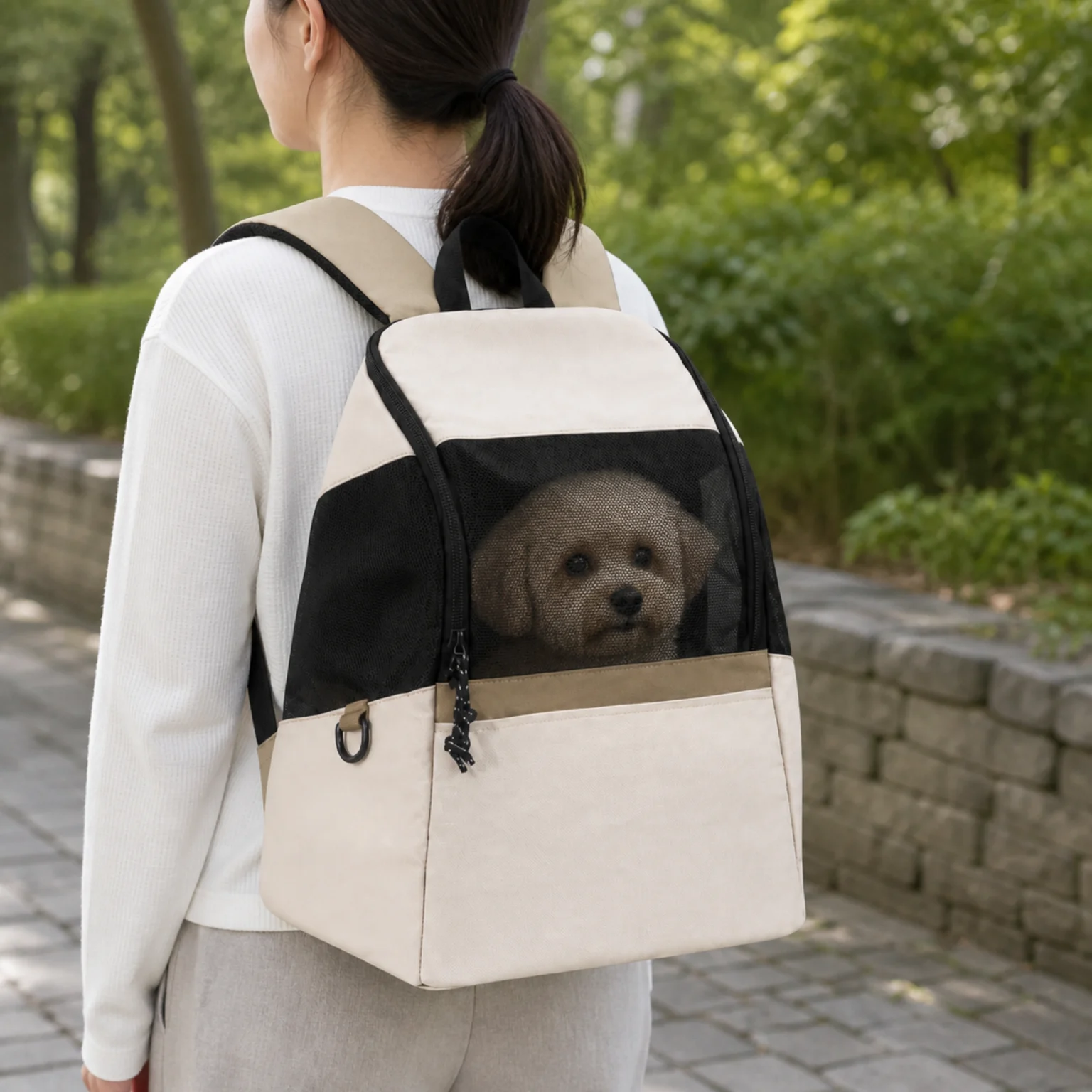
Carrier fit cannot be decided from a kilogram or pound limit alone. Weight tells you whether a product is designed for the load, while body length, seated height, width and resting posture tell you whether your pet can use the available space as intended.
Use this worksheet before you compare pet carriers. Record the product page as well as the measurements: different backpacks, slings, totes and transport providers may define dimensions differently.
Record four pet measurements
- Body length: measure on a level surface and write down the exact start and end points you used. A useful shopping reference is the front of the chest to the base of the tail, but transport providers may request another method.
- Seated height: with your pet sitting naturally, measure from the floor to the highest point of the head or ears, whichever is higher.
- Body width: measure the widest part of the shoulders or torso without compressing the coat.
- Current weight: use a recent measurement. Treat the product’s suggested weight as one check, not a promise that every pet at that weight will fit.
Build a carrier comparison sheet
| Check | Your pet | Carrier listing | Decision note |
|---|---|---|---|
| Body length | ___ cm | ___ cm | Check the listed internal or external measurement label. |
| Seated height | ___ cm | ___ cm | Check the posture the carrier is designed to support. |
| Body width | ___ cm | ___ cm | Allow for natural breathing and movement. |
| Weight | ___ kg | Up to ___ kg | Do not choose from weight alone. |
| Empty carrier weight | — | ___ g or kg | Add pet, carrier and packed-item weight. |
Read the fit, not just the numbers
| What you observe | What to check next |
|---|---|
| Your pet cannot use the posture the carrier is designed for. | Recheck usable internal length, width and height; do not rely on the weight label. |
| Ears, head, shoulders or hips are pressed into the carrier during normal use. | Compare a larger internal dimension or a different carrier structure. |
| The listing shows only external dimensions. | Ask for internal usable dimensions before deciding; frame, padding and folds can reduce the space. |
| The carrier is much larger than your pet for the planned task. | Confirm stable footing, the intended posture and the transport provider’s size rules rather than assuming more space is automatically better. |
Check the intended posture and route
A structured backpack, an open sling and a soft travel bag solve different problems. Before ordering, check whether the product is intended for a supported seated position, close carrying or room to sit and lie down. Confirm the base, openings, ventilation panels, closures and attachment points visible on the specific product page.
- For shorter everyday transitions, compare the Lightweight Pet Backpack with the Mountain Pet Crossbody Carrier.
- For a deeper structured option, review all three dimensions and empty weight on the First Class Pet Backpack.
- For transport planning, browse travel carriers only after checking the current provider rules for your route.
If you are still deciding between a soft carrier, hard carrier or backpack, use the trip-by-trip carrier type comparison before narrowing the product list.
Once fit is confirmed, use the cat carrier training and door-closure guide to introduce the carrier gradually at home. Training cannot compensate for unsuitable space.
Transport rules are a separate check
A bag that fits your pet is not automatically accepted by an airline, rail operator or other transport provider. Rules can vary by carrier, aircraft, route and date. IATA’s current air-transport guidance uses internal container dimensions and asks whether a cat or dog can sit and stand erect, turn around and lie in a natural position. It also states that IATA does not certify or endorse particular commercial container brands or models. Verify the current requirements directly with every operator on the itinerary before travel.
For air travel, record a second set of measurements
IATA’s container guidance labels nose-to-tail-base length as A, floor-to-elbow height as B, shoulder or widest-point width as C, and natural standing height as D. These measurements are not interchangeable with a retailer’s external bag dimensions. Use the current IATA document and the airline’s own instructions for the exact journey rather than treating a general shopping worksheet as approval.
Quick answers
Is the suggested weight limit enough to choose a carrier?
No. Use it together with body length, seated height, width, carrier dimensions and the posture the product is designed to support.
Should I use external or internal carrier dimensions?
Use whichever the product page clearly identifies and do not silently treat one as the other. If internal usable space is not published, ask before assuming it matches the external measurements.
Can a carrier be too large?
Extra space is not a substitute for fit. Confirm that your pet can use the intended posture, has stable footing, and still meets any transport-provider size rules. For air travel, follow the operator’s current container requirements.
Does a product name prove airline acceptance?
No. Acceptance depends on the transport provider’s current rules and the particular journey.